Column success test
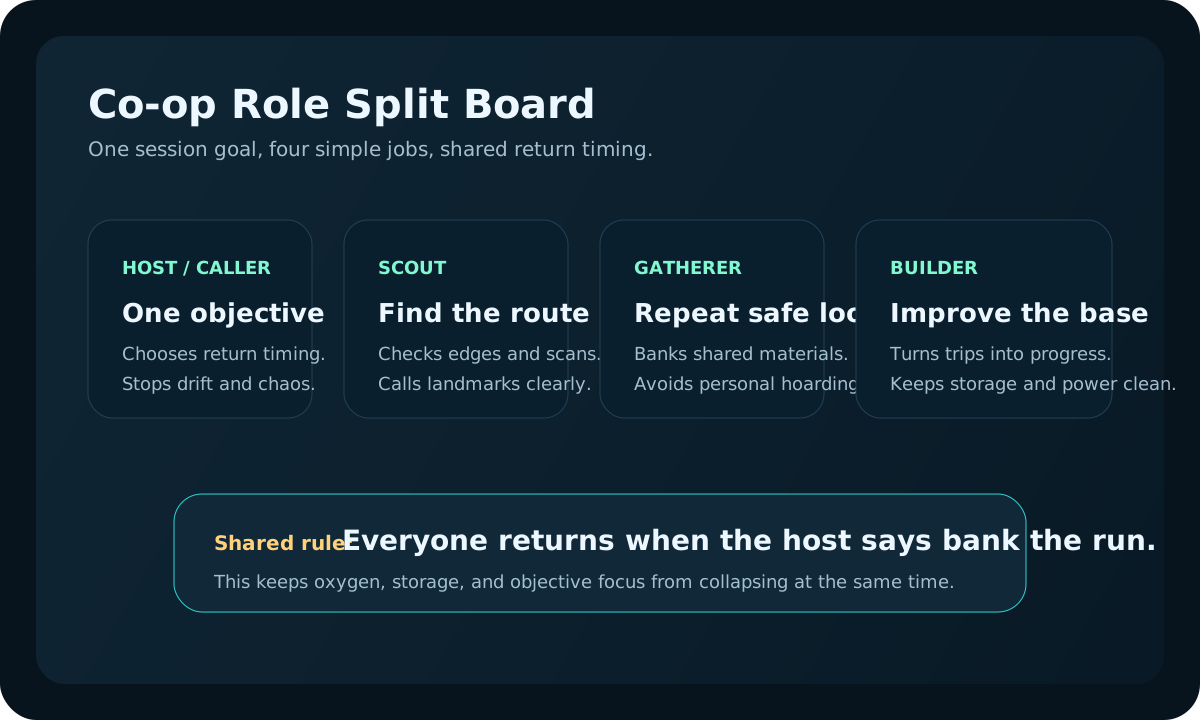
The Co-op Center has worked when the team can say who hosts, who calls the route, who gathers, and who banks.
Multiplayer planning hub
Use this center when the problem is not one material or one route, but coordination: who hosts, who scouts, who builds, who banks materials, and when the team should return.
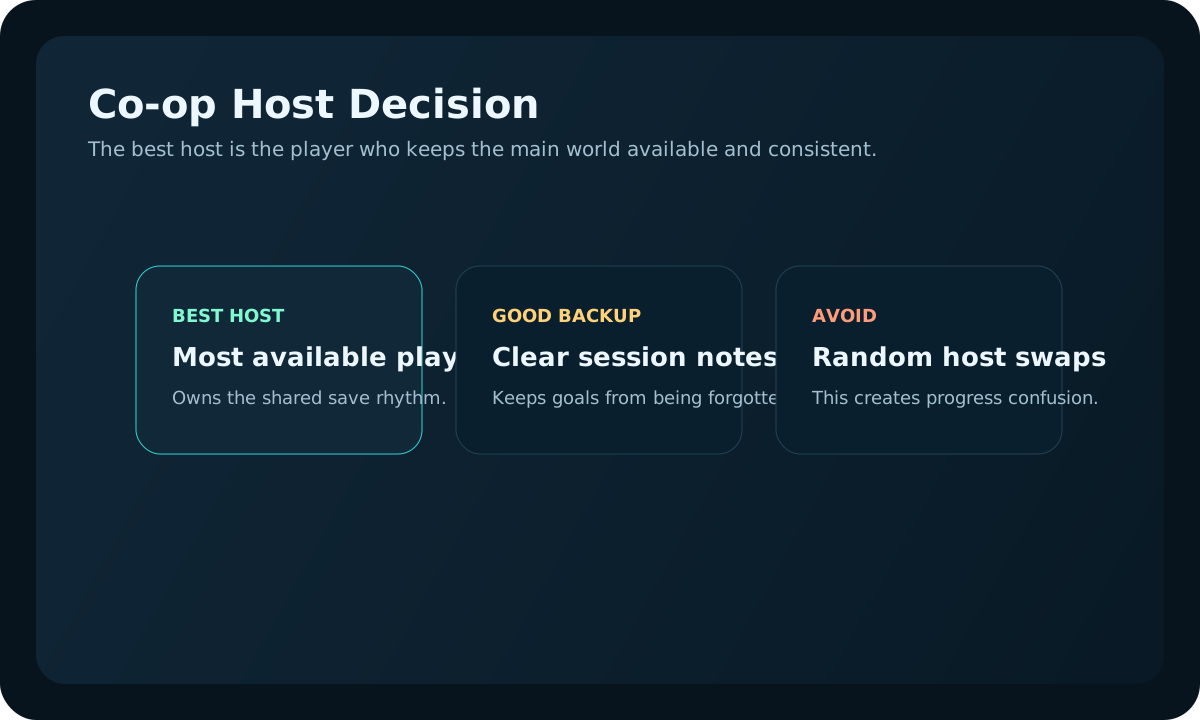
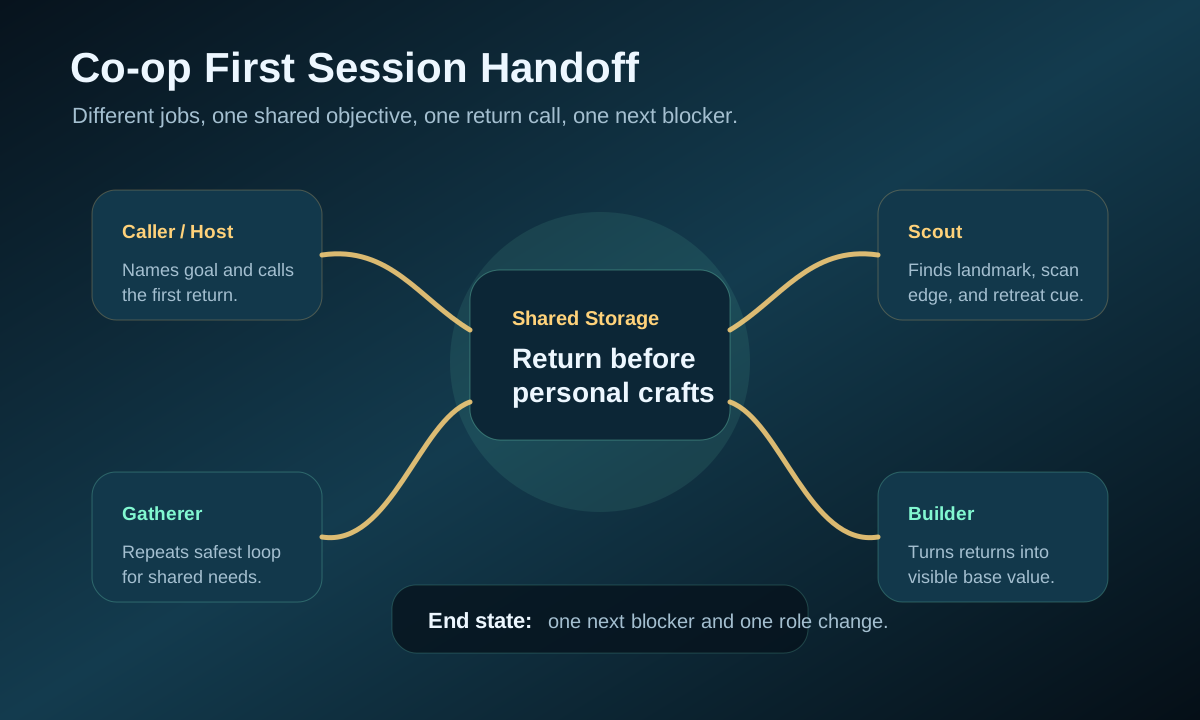
Agree on the host, one session goal, and three jobs before leaving base: route caller, focused gatherer, and base organizer. Co-op gets slower than solo when everyone chases the same material or no one owns the return call.
Column triage
Multiplayer content is useful when it prevents duplicated work, save confusion, and lost team progress. If the problem is one material, one route, or one base layout, this center should hand the team back to the specific solo page.
| Team problem | Open first | Leave this center when |
|---|---|---|
| Everyone is busy but progress is scattered. | First-session Roles | Caller, gatherer, scout, and base organizer are assigned. |
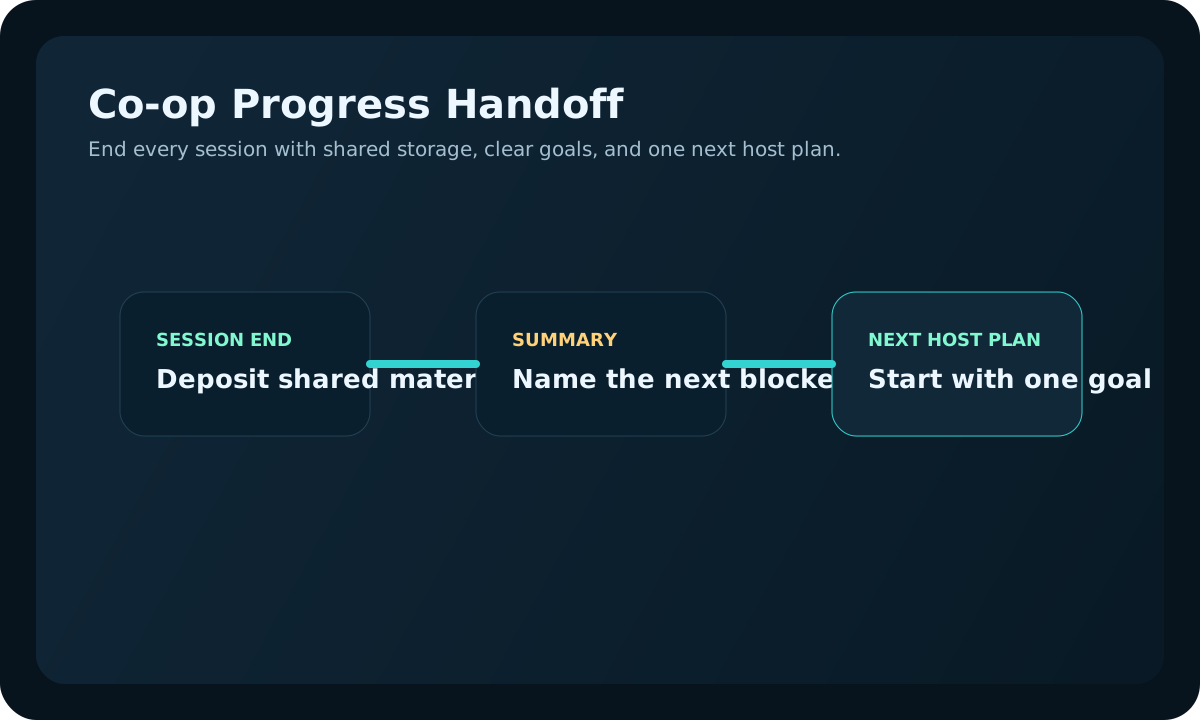
| Save ownership or restart point is unclear. | Co-op Hosting | The host, session goal, and return rule are agreed. |
| The team cannot tell what carried forward. | Shared Progress | Unlocks, materials, base work, and next task are visible. |
| The base is messy because deposits are random. | Co-op Base Roles | Shared storage and crafting ownership are clear. |
The Co-op Center has worked when the team can say who hosts, who calls the route, who gathers, and who banks.
A single material, one creature problem, or a solo base layout issue. Use the exact guide for those.
After role ownership is clear, send each player to the specific material, base, route, or progress page they own.
Exit rule
Co-op content should fix coordination. It should not replace every solo guide with a multiplayer copy. When the host, route caller, gatherer, base organizer, and return-call owner are clear, the team should split into the exact pages that match each job.
Stay here if people duplicate errands, dump materials randomly, or disagree about the session goal. Leave for Materials when one player owns a batch, leave for Map when the caller needs landmarks, and leave for Base Building when the organizer needs storage or power rules. That handoff keeps the co-op page from becoming a broad archive.
Use this center when the team is slower because decisions, storage, or route ownership are unclear.
The blocker is one named material, one dangerous route, or one base layout problem that a solo guide already answers.
Co-op advice should be rechecked after updates that mention hosting, saves, progression, inventory, or shared systems.
Recommended workflow
| Before leaving | Assign this owner | Success looks like | Open next |
|---|---|---|---|
| Session goal | Host or route caller | Everyone can say the one objective before anyone swims away. | Hosting guide |
| Route and return | Scout / caller | The team knows the landmark, risk edge, and bank point. | Solo vs co-op route |
| Materials | Focused gatherer | Only one player owns the named batch, so storage does not fill with duplicates. | Resources hub |
| Base flow | Base organizer | Deposits, power, storage, and next craft stay visible to the whole group. | Co-op base roles |
First-session checklist
Common mistakes
Fix it by naming one gatherer and one base organizer before the group leaves.
Fix it by giving one player permission to bank progress before the route gets greedy.
Fix it by checking shared-progress expectations before the next session starts.
Visual handoff
Trust and updates
Multiplayer advice can age faster than broad beginner guidance because hosting, progression, inventory, and role flow can change with Early Access updates. Use the update tracker after any patch that mentions co-op behavior, saves, hosting, or shared systems.