Best co-op base roles for smoother Subnautica 2 sessions
Co-op becomes slower than solo when everyone does everything. The
fix is not stricter play. It is a light role split that keeps the
base useful, routes clean, and every return tied to the same plan.
Published July 29, 2026Co-op lanePatch sensitivity: Medium
Last reviewed August 17, 2026Review focus role clarity and shared-session value
Reviewed on August 17, 2026 to keep the co-op advice grounded in
practical session management rather than speculative feature
claims. This refresh adds clearer handoffs, smaller role swaps,
and one-session rescue plans for drifting teams.
Quick answer
The best early co-op split is one route caller, one focused
gatherer, one base organizer, and one flexible scout. Keep the
roles light enough to swap, but clear enough that every player
knows what should happen before the next return home.
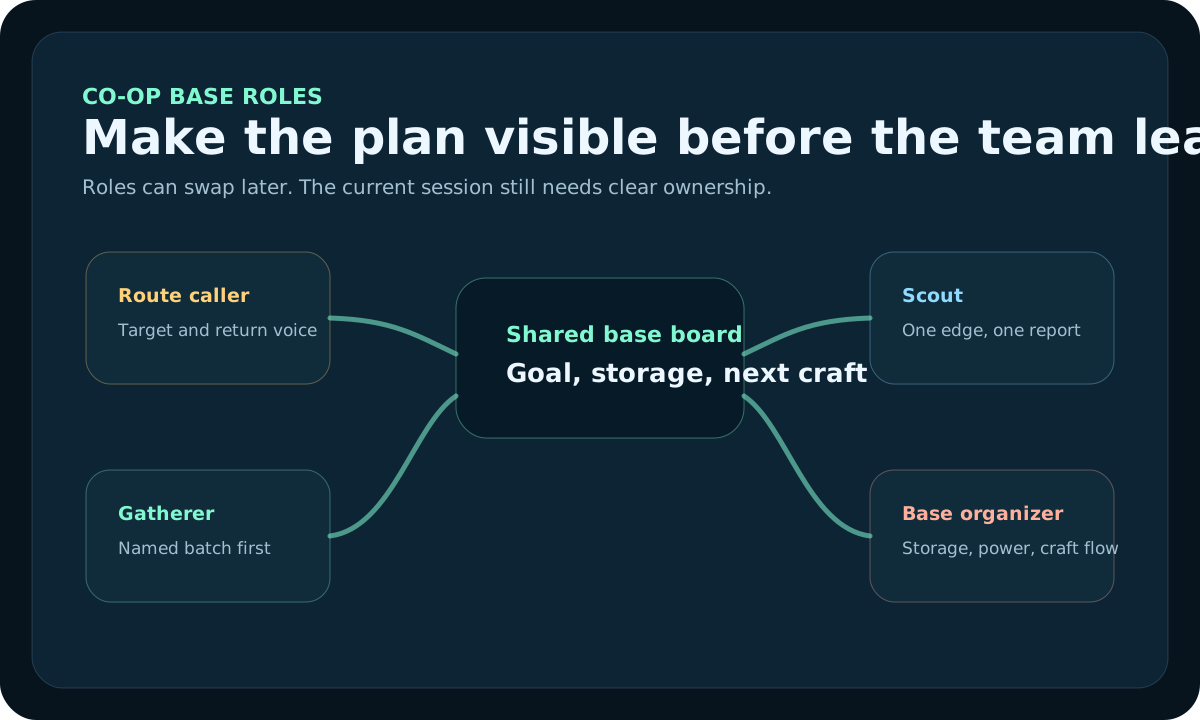
Co-op base role layout
Put the session plan where every player can understand it:
target, route caller, gatherer, scout, base organizer, and the
next handoff. Roles can change, but the current job should not.
The best co-op role split is light enough to swap later and clear enough to stop duplicated work right now.
Why co-op needs base roles earlier than solo
Solo players can keep a plan in their head. Co-op teams need
the plan to be visible. Without roles, one player brings Copper,
another brings mixed food and salvage, someone starts a room,
and no one knows whether the next problem is power, storage, a
route, or a missing tool.
Roles do not need to be permanent. They only need to last for
one session goal. The base organizer can become the scout later.
The gatherer can become the builder after the material batch is
banked. What matters is that the current run has a shared job.
Role table for the first shared base
Role
Main job
Good handoff
Common mistake
Route caller
Names the trip target and decides when the team turns back.
Marks what changed before the next launch.
Letting the route grow because someone saw one more thing.
Focused gatherer
Collects the named material first, not every nearby item.
Deposits into the correct storage or craft path.
Returning with a full inventory but no solved blocker.
Base organizer
Keeps storage, power, and next-craft visibility clean.
Tells the team what the base can support next.
Building extra rooms before the current base loop works.
Scout
Checks one landmark, edge route, or threat cue without overcommitting.
Reports the next safe angle, not a vague "there is stuff there."
Turning scouting into a separate unplanned adventure.
Session examples
Pick the role split by the problem, not by personality.
The team needs one shared route target.
Use route caller plus gatherer when every player keeps chasing a different nearby reward.
The base needs one person watching friction.
Use a base organizer when storage, power, and build order keep interrupting the next route.
Risk needs a clear turn-back voice.
Use a return caller when creature pressure, darkness, or oxygen starts splitting team judgment.
One-session co-op base plan
Agree on the next craft, route, or system before anyone leaves.
Assign one person to protect storage and power visibility.
Send one focused gatherer for the material that unlocks the plan.
Let the scout check only one edge or landmark before reporting back.
Return together or with a clear staggered handoff, then choose the next role split.
The point is not to make co-op feel like work. The point is to
remove the slow confusion that makes a fun session end with a
messy base and no one sure what changed.
Example: if three players log in and the base already has half
sorted storage, do not start with three explorers. Put one
player on "fix the home wall," one on "bring back the named
material," and one on "test one safe landmark." In fifteen
minutes the team will know whether the session should become a
build session, a farm session, or a deeper route session.
How to swap roles without losing the plan
Roles should be flexible, but the handoff must be specific. If
the scout becomes the builder, they should bring back the route
clue, material need, or danger warning that changes the build
plan. If the gatherer becomes the organizer, they should know
which craft the material batch was meant to finish. If the route
caller swaps out, the new caller needs the current stop rule,
not just "keep going."
Handoff
Say this before swapping
Why it matters
Scout to builder
"The next route needs storage/power/scan support because..."
The base upgrade stays tied to real route friction.
Gatherer to organizer
"This batch is for this craft, not general storage."
The team avoids burying progress in mixed containers.
Route caller to scout
"Turn back at this signal, even if the route looks promising."
The team keeps the stop rule after roles change.
Good co-op roles should reduce talking, not add meetings
The point of role planning is not to slow the group down. It
should remove repeated debate. When the route caller names the
target, the gatherer knows what to pick up first. When the base
organizer keeps storage readable, everyone can see what the next
craft needs. When the scout reports one clear clue, the next
route becomes easier to agree on.
If role planning feels heavy, shrink it. Use only two roles:
one player protects the route decision, and one player protects
the base decision. That is often enough to keep a casual session
from drifting into four separate errands.
End-of-run role reset for casual groups
Co-op sessions drift when everyone remembers a different
version of progress. Use the last two minutes of a run to reset
roles around the next visible blocker, then the next login
starts with momentum instead of debate.
Before logging off
Who says it
Next session starts with
The route result: repeat, widen, or stop.
Route caller or scout.
A known water plan instead of three guesses.
The exact craft or system still blocked.
Builder or base organizer.
A shopping list tied to one upgrade, not general farming.
The storage handoff location.
Gatherer or organizer.
Players can see progress without opening every locker.
The role that should change next time.
Any player who felt idle or overloaded.
A lighter split that fits the group instead of a rigid job chart.
What happens when roles are too rigid
A role split becomes bad when players start defending the role
instead of the goal. If the gatherer refuses to help with a
short base fix, if the scout keeps scouting long after the route
is already clear, or if the organizer spends the whole session
sorting instead of enabling the next trip, the team is
over-structuring the session. Good co-op roles are temporary
tools, not job titles.
The safest solution is to keep the job split light and review it
at the end of every run. Ask what repeated friction the team
still has, then decide whether the next session needs the same
roles or a simpler two-person split instead.
A good team check takes less than a minute: what are we building,
who is protecting the route, who is protecting the base, and
when do we call the return?
If the team says
The real problem is
Better role adjustment
"Everyone is busy, but nothing is moving."
Too many parallel jobs and no session owner.
Collapse to route caller plus base organizer for one full run.
"We keep coming back with good stuff, but the base is worse."
Returned value has no visible handoff.
Make one player deposit and craft before anyone launches again.
"The scout keeps finding new ideas and we never finish one."
Scouting has no stop rule.
Give scouting one landmark or one warning target, then force the report.
Example: a two-player base session that does not drift
With two players, use fewer roles instead of weaker roles. One
player protects the route decision and the other protects the
base decision. The route player names the trip target, watches
the return signal, and reports whether the next route should
repeat or widen. The base player keeps storage readable, checks
power, and turns the returned batch into the next visible craft
instead of letting it disappear into mixed containers.
A clean 40-minute session can be simple: agree on one craft,
leave with enough empty slots, return before the route gets
exciting, deposit into one labeled place, then decide the next
action while everyone can still see what changed. If the team
cannot name the next action after banking, the previous route
was too broad.
Session moment
Route player says
Base player says
Before launch
"This trip is for one named material or scan."
"This is where the batch goes when we return."
At halfway pressure
"We bank now if the return cue gets unclear."
"Do not widen until the current craft is visible."
After deposit
"The route should repeat, widen, or stop because..."
"The base can support the next run if..."
Maintenance note for this co-op page
Review date: August 17, 2026. This guide was refreshed to keep
its advice durable even if co-op progression details continue to
shift during Early Access. The stable part is the session
structure: visible goal, visible stop rule, visible handoff.