You are ready to place a base, but still are not sure which location will actually make the next ten trips easier.
Base-building guide
Best first base location in Subnautica 2
A first base should remove friction immediately. The right spot shortens drop-offs, supports the next few builds, and feels safer every time you return with a full inventory.
Last reviewed August 17, 2026
Patch sensitivity Medium
This guide is most likely to change if safe biome layouts, base utility priorities, or early creature pressure are updated.
Safe drop-off rhythm, repeatable material access, and one clear side for future growth.
Quick answer
The best first base location is usually a safe, material-rich area that keeps travel short and oxygen recovery easy. Early convenience matters more than a flashy long-term location.
August 20 structure update
- Fastest answer: pick the first base where three normal returns become easier, not where the view looks best.
- Functional visual: use the first-base decision diagram and three-return test before spending more materials.
- Next-step rule: move to Build Order, Base Power, or Storage Upgrades after the site passes the return test.
- Report issues: send location, route, or base-flow corrections through Reader Reports.
Page media
Open this set before you commit resources to the wrong beautiful spot.
Use one base-timing check, one builder follow-up, and one scanner support page when your location choice still feels more theoretical than practical.
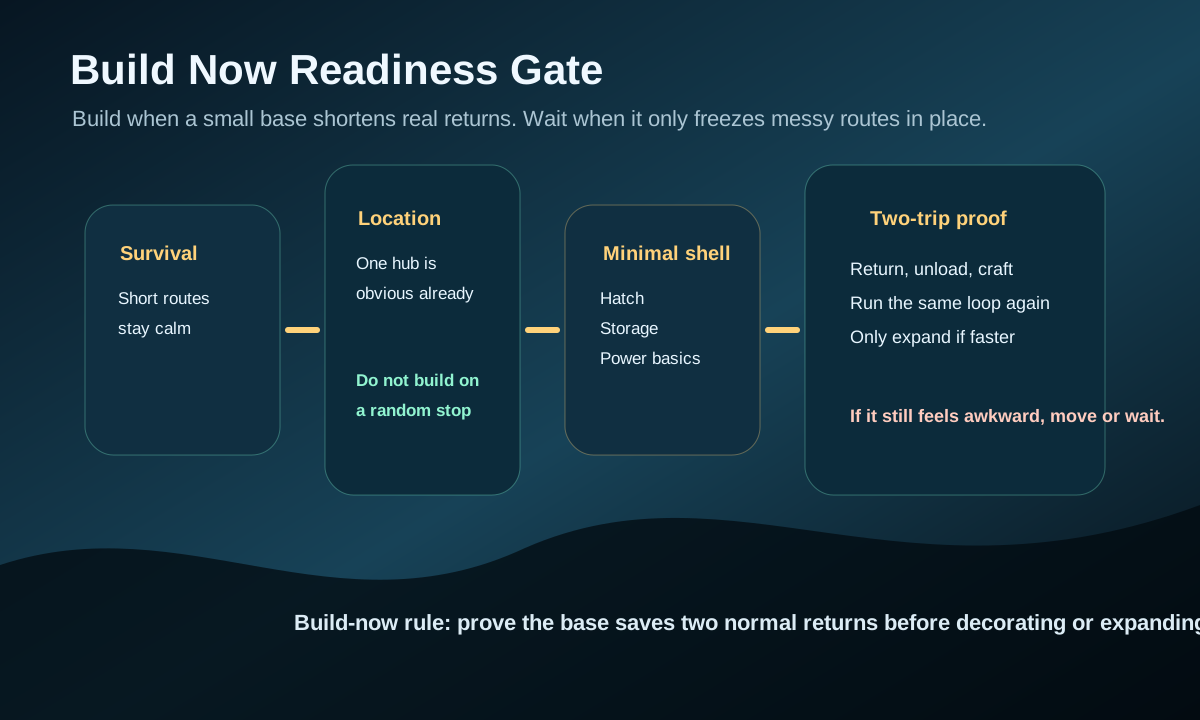
Timing check
Build base now or wait?
Open this when the location choice feels theoretical because the route has not proved a base belongs yet.
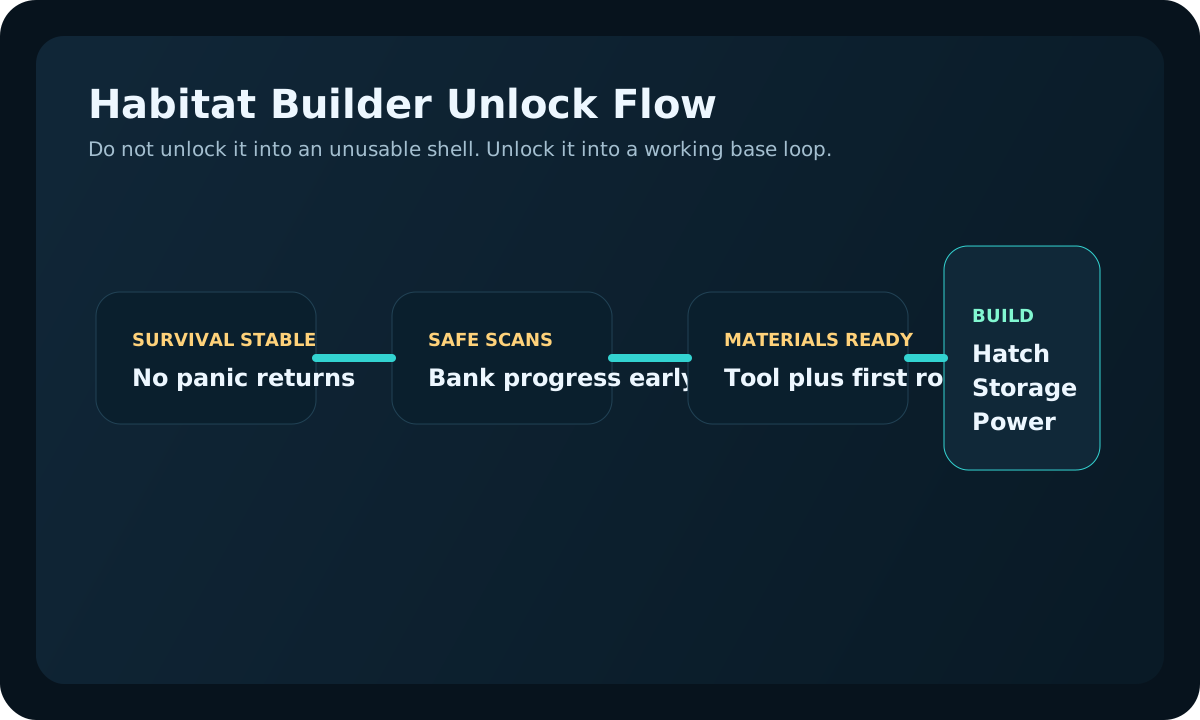
Builder path
How to unlock the Habitat Builder
Open this next when the site is chosen already, but you still need the shortest path into useful rooms and base function.
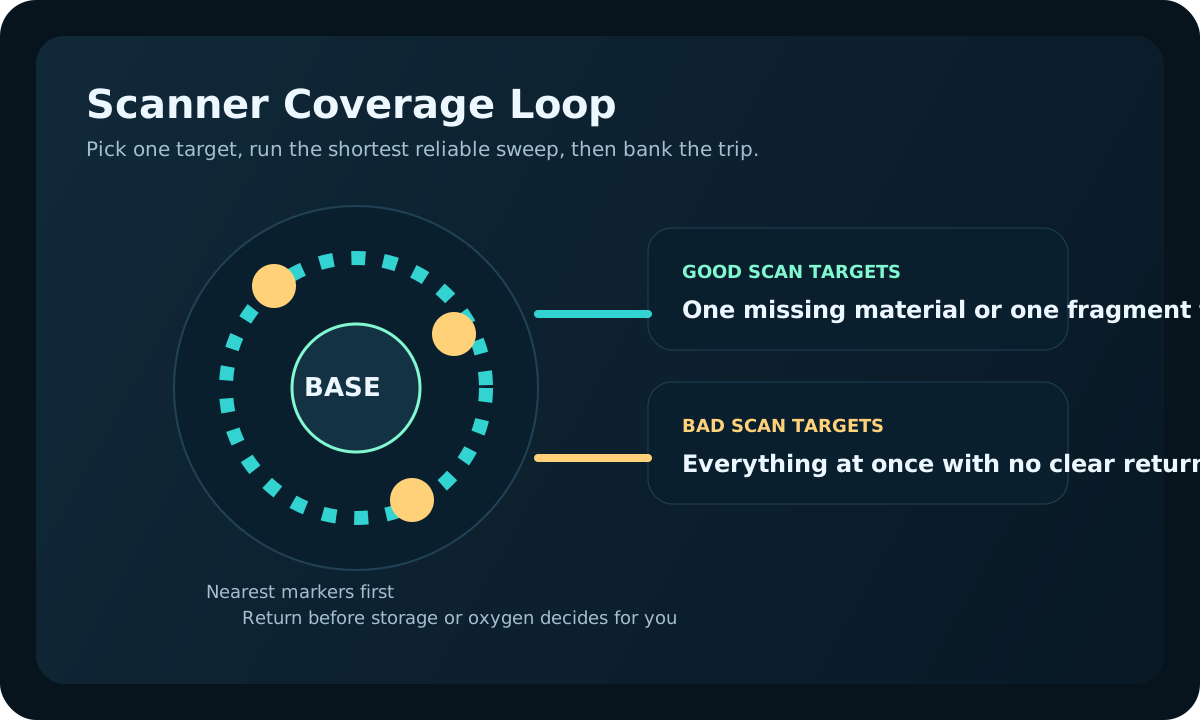
Expansion support
How to use the Scanner Room efficiently
If the next decision is the base spot, test whether it supports smarter farming and routes.
First base decision visual
Pick a first base where safety, materials, oxygen return, and future expansion overlap. A location that only solves one of those needs usually becomes annoying after a few trips.

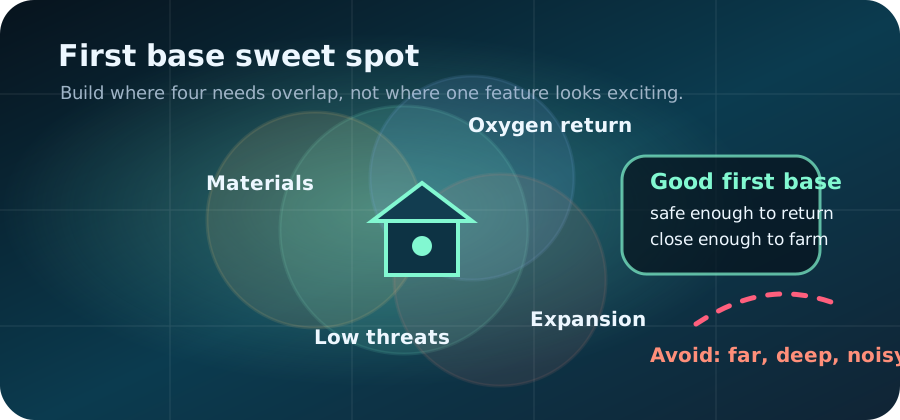

First base checklist
Use this before committing a serious amount of materials to the first base footprint.
First base location scorecard
Check the location against these signals before spending materials. A location does not need to be perfect, but it should not fail more than one core test.
| Factor | Good sign | Bad sign | Decision |
|---|---|---|---|
| Safety | Low threat pressure on routine returns. | Creature noise or attacks interrupt drop-offs. | Move the footprint closer to the safe edge. |
| Materials | Titanium, Copper, or Quartz loops are repeatable. | Every build piece requires a long separate trip. | Use it as a temporary outpost, not the main base. |
| Oxygen return | You can return calmly even with a full inventory. | Every trip ends with low oxygen pressure. | Upgrade oxygen or choose a shorter route first. |
| Expansion | One side stays open for scanner, storage, or vehicles. | The layout blocks every future utility room. | Rebuild early before the base gets expensive. |
Real gameplay checkpoints
If the first base still feels uncertain, look at which location failure is actually bothering the run.
Most players do not need a prettier base answer. They need to know whether the site is failing on supply, expansion, or basic safety.

The location is earning its keep because supply trips feel shorter right away.
This is the green light pattern: every normal return is calmer, quicker, and more useful than before the base existed.
Open Titanium guide
The site is close to value, but it still needs better room priority to pay off.
Stay with the location and fix the room order next when the footprint looks fine, but the base still feels underpowered.
Open first base build order
The spot looks exciting, but routine returns keep feeling longer, louder, or more dangerous.
Move early when the footprint is creating stress instead of removing it. A good first base should make ordinary trips boring.
Open safe-biomes guideBase setup priority order
- Place the first base close enough to safe materials that every return trip takes less planning than the trip before it.
- Build the minimum functional shell first: hatch access, oxygen recovery, storage, and crafting access before cosmetic rooms.
- Add power only after you know the base will stay in use; a poor location with good power is still a poor location.
- Leave one side open for scanner, vehicle, or storage expansion so the first base can grow instead of forcing a full rebuild.
Use this first-base placement run
A good first base location usually proves itself in one short test run before you sink more materials into it.
| Placement step | Do this | Move on when | Success looks like |
|---|---|---|---|
| Before placing | Stand where the base would go and imagine the next three return trips. | You still cannot tell whether storage, crafting, and oxygen reset would actually save time here. | The location already feels like the natural end point of your best loop. |
| After placing the shell | Run one normal material trip through it instead of expanding immediately. | The trip still feels awkward, long, or unsafe even with the base there. | The new drop-off clearly shortens the route and calms the return. |
| Before expanding | Decide which room or system would save the next run the most time. | You are adding rooms only because the footprint is now available. | Each added piece has one obvious job in the next few runs. |
Three-return site audit
Test the base location with ordinary routes before building it bigger. A good site should feel useful during boring returns, not only when you imagine future expansion.
| Return type | Pass signal | Warning sign | Decision |
|---|---|---|---|
| Material return | The base is the natural end point of the loop. | You swim past easier drop-off points to reach it. | Move closer to the route before expanding. |
| Survival reset | Food, water, oxygen, and tools reset quickly. | The site still starts trips with weak prep. | Fix basic setup or choose a calmer site. |
| Scanner or storage growth | One side has a clear purpose for the next system. | Every useful expansion creates awkward movement. | Rebuild early while the footprint is cheap. |
| Co-op deposit | Players can unload shared materials without debate. | The location turns every return into sorting confusion. | Add labels or move the shared drop-off point. |
August 16 update: prove the base spot with three ordinary returns.
A first base location should make normal play calmer before it becomes impressive. Test it with three boring returns: one material run, one survival reset, and one utility or co-op drop-off.
| Return test | Keep the location if | Move or delay if | Fix before building bigger |
|---|---|---|---|
| Material route return | The base naturally ends the loop and turns the haul into a craft. | You pass easier drop-off points just to reach the chosen view. | Choose a spot closer to the repeated material lane. |
| Survival reset return | Food, water, oxygen, and tools reset quickly before the next route. | The site starts every trip with prep friction. | Move support storage and essentials closer to entry. |
| Utility growth return | Scanner, power, storage, or vehicle support has one clear expansion side. | Every useful add-on would make movement awkward. | Reserve a utility side before decorating. |
| Co-op drop-off return | Two players can unload and see the next shared task without debate. | Materials scatter because the base does not communicate where progress goes. | Create a shared drop-off lane before personal storage. |
What a good first base needs
- Low threat pressure
- Fast access to core materials
- Easy return routes during short exploration loops
Move the base plan if
- The safest material route still feels too far after several trips.
- Power, storage, or scanner expansion has no clean side to grow into.
- Creature pressure keeps interrupting routine drop-offs.
What makes a location look better than it really is
- It looks central on paper, but your real material runs still approach it from awkward angles.
- It feels exciting for future expansion, but the next three runs would still be slower there.
- It is close to one useful thing, but far from the repeatable loops that actually matter now.
- It avoids one threat, but creates a longer oxygen or deposit route every time you come home full.
July 31 base-site review note
This page was tightened around a practical site test: a first base should prove itself after three normal returns. If it only looks attractive on the map but still makes deposit, refill, or craft flow slower, it is not the right first home yet.
- Keep the site if material returns, survival resets, and next-craft checks all become faster.
- Move the plan early if every useful route approaches the base from an awkward angle.
- Delay expansion if the shell works, but storage and power still do not make the next trip easier.
Ten-minute base site proof run
A first base should pass a short practical test before it gets more rooms. Run this sequence once with normal supplies and judge the location by time saved, not by how good it looks from the outside.
| Proof step | What to test | Keep the site if | Move or delay if |
|---|---|---|---|
| Approach | Swim in from the material route you expect to repeat most. | The base is the obvious drop-off point before inventory pressure gets annoying. | You pass a safer, shorter return point on the way there. |
| Reset | Deposit, craft, refill, and leave again without rearranging everything. | The next route starts faster than it did from the old home point. | Storage, entrance, or power placement makes every reset clumsy. |
| Expansion | Look for one clean side for scanner, storage, or vehicle support. | The next useful room has a natural place to go. | Every expansion blocks movement or pushes the base toward danger. |
| Co-op drop-off | Imagine two players returning with mixed materials at once. | Shared unload and next-task reading would be obvious. | The base creates sorting confusion before it solves route friction. |
First base purpose before decoration
The first base earns its place by solving one practical job. Pick the job first, then build only the rooms that support it.
- Material bank: use this purpose if the base shortens Titanium, Copper, Quartz, or Glass returns.
- Route reset: use this purpose if food, water, oxygen, storage, and tools need a reliable midpoint.
- Scanner support: use this purpose if the site will make repeated searches less random after the first shell is stable.
- Co-op staging: use this purpose if the team needs one shared drop-off and role board before personal storage spreads out.
Next route map
Choose the next page by what the base site still is not solving.

If the builder path is still fuzzy
How to unlock the Habitat Builder
If the location feels right but the first room is expensive or unclear, review builder timing.

If farming still feels blind
How to use the Scanner Room efficiently
Once the base is down, make the next win cleaner material loops instead of random wandering.

If build funding is the blocker
Where to find Titanium early
If the site is right, fund storage, shell pieces, and basic expansion in a cleaner order.