What should you recheck after a Subnautica 2 update?
Early Access guides age differently from finished-game guides.
After an update, the safest move is to recheck the systems that can
change a run: routes, resource hints, base behavior, scanner value,
creature pressure, and co-op expectations.
Published July 29, 2026Update-sensitivePatch sensitivity: High
Last reviewed August 31, 2026Patch sensitivity High
Rechecked on August 17, 2026 against the current official timeline:
Early Access opened on May 14, 2026, the roadmap post followed on
May 15, 2026, and the latest official milestone in this review was
the Adaptive Measures 1.1 update cycle with Hotfix 4 on July 14,
2026.
Quick answer
After a Subnautica 2 update, do not trust old route advice
blindly. Recheck official notes first, then test one safe loop
before relying on older advice about resources, deep routes,
base systems, Scanner Room value, or co-op progression.
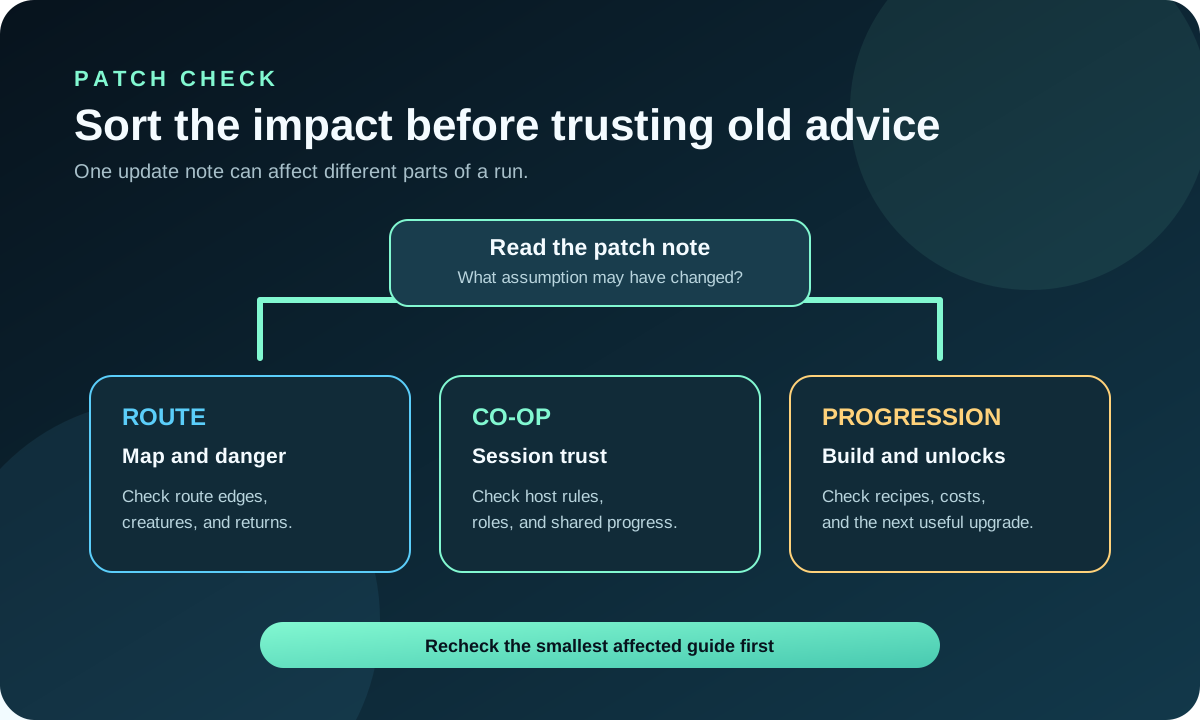
Three update scenarios to recheck first
Patch note mentions
Recheck first
What to do next
Routes, biomes, or navigation
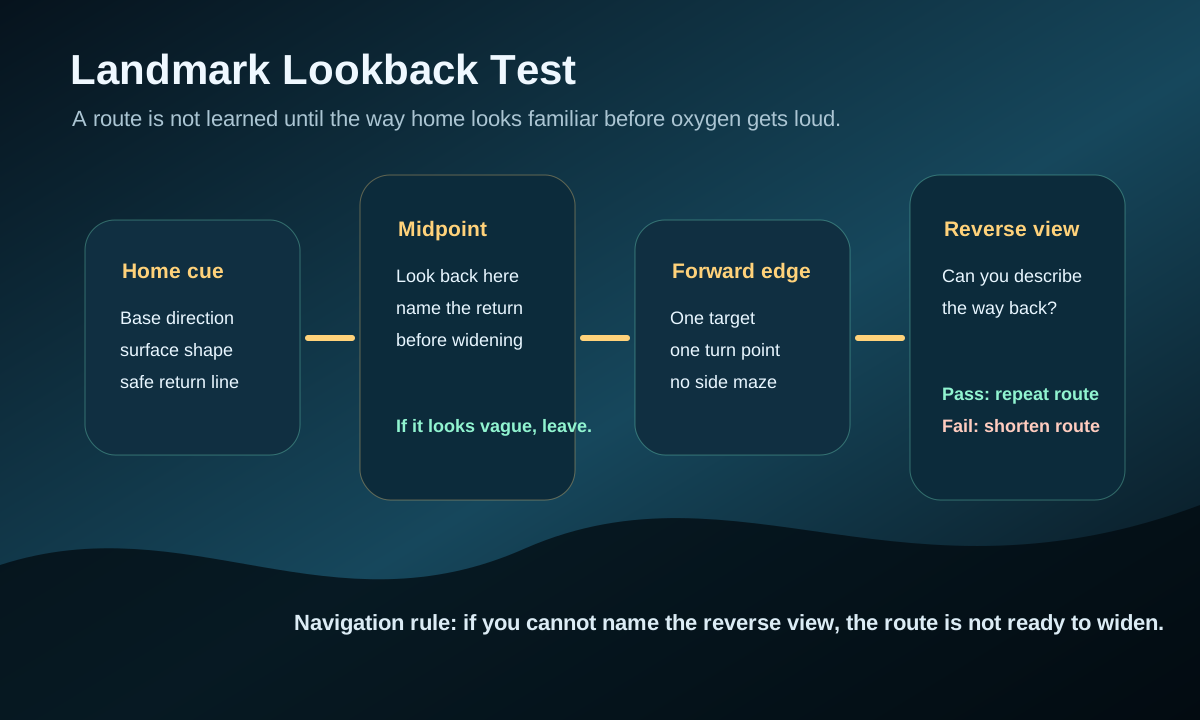
Landmark chains and retreat points
Run one short loop before trusting a longer route.
Resources, crafting, or scanning
Material priority and scanner value
Confirm the current payoff before farming the same item again.
Co-op, saves, or progression
Host flow and shared progress
Test one short shared task before a full session.
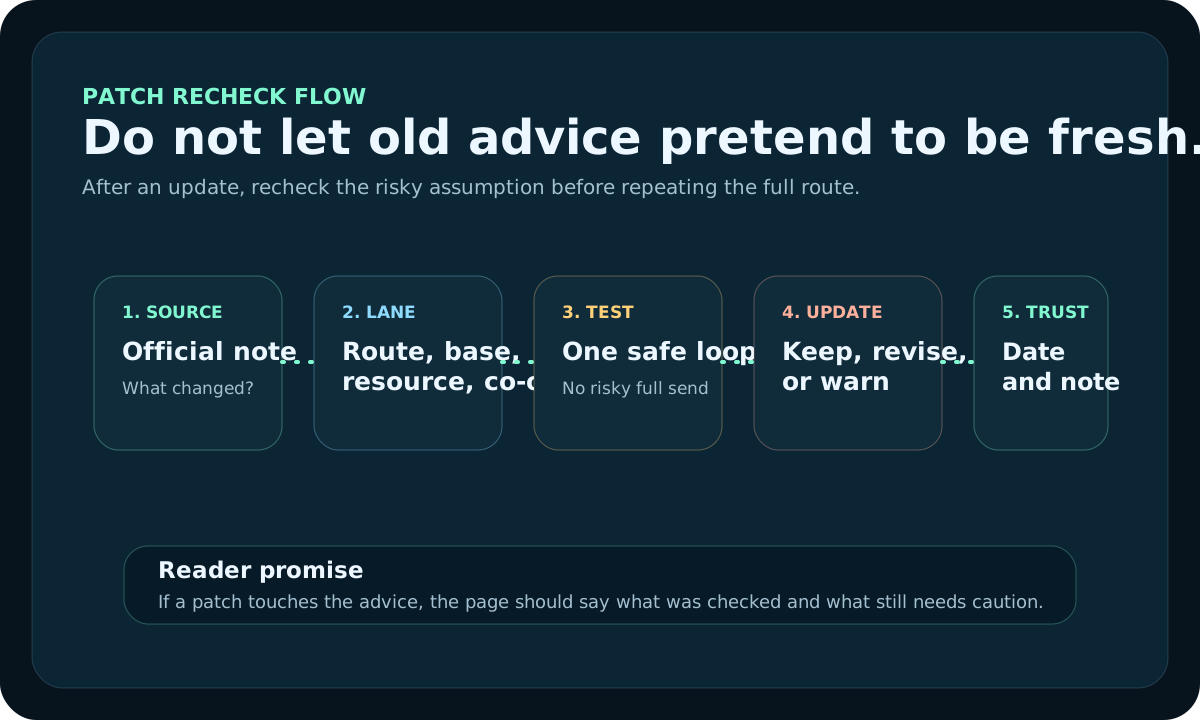
Patch recheck trust flow
Use this flow after each Early Access update. It shows how to
move from official notes to a safe test loop before trusting an
older route, base, resource, or co-op recommendation.
Fresh-looking advice should also show what changed, what was tested, and where caution still belongs.
The update recheck order
Start with the parts of the game that can make a guide unsafe
or misleading. A typo fix rarely changes a route. A progression,
resource, creature, base, or multiplayer change can make an old
answer feel wrong immediately. That is why update review should
prioritize player risk, not page age.
Anchor yourself to the current official note or hotfix date before touching any older guide.
Read the update headline and identify which systems changed.
Open the matching site guide only after you know the affected lane.
Test one safe version of the route before repeating a risky version.
Update your own plan if the old guide assumes a different cost, path, or rule.
Current official timeline to compare against
Official checkpoint
Date
Why it matters for guide review
Early Access launch
May 14, 2026
Sets the start of the live-build era; anything older is background, not live guidance.
Roadmap post
May 15, 2026
Useful for knowing which systems are expected to move during the year.
Adaptive Measures 1.1
July 8, 2026
Signals that route, system, and progression assumptions may need retesting.
Adaptive Measures Hotfix 4
July 14, 2026
The latest official build checkpoint used in this August 31 review pass.
Patch-sensitive checks by player problem
If the update mentions
Recheck this first
Why it matters
Safe next click
Resources, hints, recipes, or crafting
Material priority and specific resource routes
Old farming advice may still work, but the best target may change.
Use a small test loop before trusting a full route.
Map route check
Repeat the edge of the route first. Do not commit to the center until the return still feels readable.
Material check
Confirm the craft that still matters before farming the same material just because an older guide said so.
Co-op check
Run one short shared task before starting a long team session on old host or progress assumptions.
How to treat old guide advice
Old advice is not automatically bad. Broad principles usually
last longer than exact route claims. "Return before panic" is a
durable rule. "This exact path is safest" is more patch
sensitive. "Build a base when it reduces repeated friction" is
durable. "This exact build order is always optimal" should be
checked after system changes.
When reading older advice, look for the assumption underneath
it. If the assumption still feels true in your current save, the
guide may still help. If the update changed the system that made
the advice work, use the guide as a question list rather than a
script.
Three levels of update risk
Not every page needs the same level of suspicion after an
update. Broad beginner habits usually survive well because they
are based on decision-making: keep oxygen margin, name the trip,
and return before panic. Exact route, resource, or co-op claims
need more care because those are tied to live systems that can
change during Early Access.
Risk level
Usually includes
How to use older advice
Low
General survival habits, return rules, one-target planning.
Use normally, but still check if the page has a newer review date.
Use the logic, then confirm the current cost and payoff in your save.
High
Danger zones, rare routes, material density, co-op progression, host assumptions.
Use as a checklist, not a script, until a safe test run confirms it.
A real recheck session should stay small
The mistake after a patch is trying to retest the whole game in
one evening. Keep the first recheck small. Pick the system that
matters to your current save, test a safe loop, and write down
whether the old advice still feels reliable. If the update
touched resources, do one material run. If it touched base
systems, do one return-and-craft loop. If it touched co-op, do
one shared session task before starting a long run.
This gives you usable information instead of a vague feeling
that "something changed." The goal is not to prove every guide
right or wrong. The goal is to know which advice is safe enough
for the next practical decision.
Signs the old advice is still usable
Old advice is usually safe to keep when the core decision still
matches your save: one route is still safer than another, one
material still unlocks the next useful craft, or one base
upgrade still removes a clear point of friction. The exact
numbers may shift, but the reason for the choice stays the same.
That is the kind of advice worth keeping first after a patch.
If the update changed the reason for the choice, then the page
should be treated as partially stale. At that point use the page
as a framework and recheck the route or system before trusting
the final recommendation.
A useful reader check is simple: can you explain why the old
recommendation still works in the current build? If not, pause
before spending rare materials or committing a long session to
that advice.
Patch trust verdict after one small test
After a patch, do not leave a guide in a vague "maybe stale"
state. Give the page a practical verdict based on one small
test so readers know whether to trust, shrink, or retest the
advice before spending a session on it.
Test result
Page verdict
Reader action
The old route still returns safely and solves the same blocker.
Keep the advice active with a fresh review note.
Use the guide normally, but keep route checks conservative.
The route works, but takes longer or needs a safer stop rule.
Mark the advice as usable with caution.
Run the shorter version before widening again.
The route, recipe, or co-op assumption no longer matches play.
Treat the page as needing revision.
Use only the decision framework until the specific advice is updated.
The patch did not touch the system the page depends on.
Leave the advice unchanged, but record the source of confidence.
Prioritize rechecking higher-risk pages first.
Write down one patch note before changing your route
The best recheck notes are short enough to use mid-session. Do
not write a full review. Write the page you are testing, the
system that may have changed, what you tested, and whether the
old advice still helped the next decision. That gives you a
useful memory trail without turning the game into paperwork.
Note field
Example
Why it helps
Page tested
Safe Resource Loop or Co-op Base Roles.
You know which advice might need a correction later.
Patch-sensitive system
Resource value, route pressure, base support, or host flow.
The note stays tied to the system that actually changed.
Small test
One repeated loop, one shared task, or one base return.
A small test is safer and easier to compare than a full-session guess.
Decision after test
Trust, retest, shrink route, or report correction.
The note ends with an action instead of vague uncertainty.
Example maintenance note for a guide page
A normal guide site should show that pages are reviewed, not
frozen forever. Use a short maintenance note like this when a
route, recipe, or co-op assumption still works after a patch
check.
Field
Example entry
Reader value
Reviewed
August 31, 2026
Shows the page was checked during the current maintenance cycle.
Scope
Official note date, safe route logic, material priority, base support, and co-op assumptions.
Explains what was checked without pretending every number is permanent.
Result
Advice remains usable as a decision framework; exact routes should still be tested safely against the latest official build.
Gives a practical confidence level instead of a vague "updated" label.