A messy first base usually is not too small. It is too unclear.
The storage does not support the next craft, the rooms do not
shorten the route, and every return trip still feels like a second
job. Fix the flow before you grow the footprint.
Published July 29, 2026Crafting lanePatch sensitivity: Medium
Last reviewed August 17, 2026Patch sensitivity Medium
This guide is rechecked when base layout, power support, storage flow, or scanner timing changes affect first-base cleanup.
Quick answer
Fix a messy first base by tightening four things in order:
entry and craft flow, storage clarity, power stability, and
only then optional support systems. If the base still does not
shorten your next three returns, it needs cleanup before it
needs expansion.
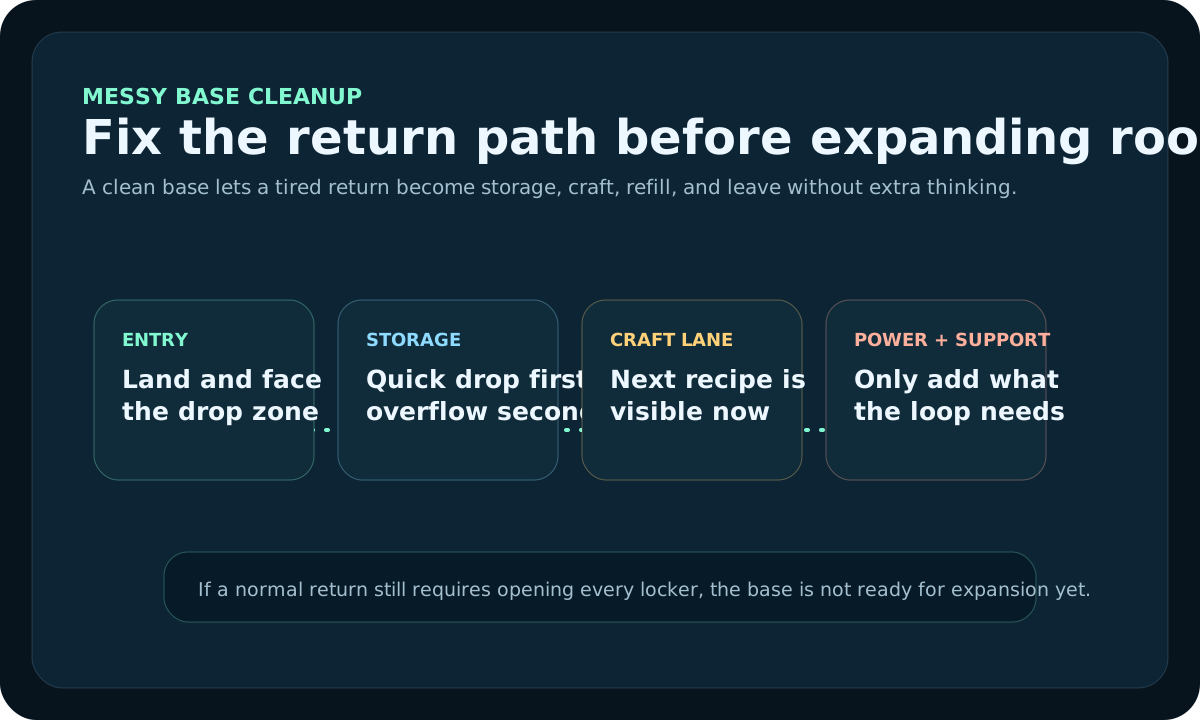
Messy base cleanup route
Fix the return path before adding more rooms. A useful base
should turn a tired trip into drop-off, craft, refill, and leave
without forcing another planning session.
If a normal return still means opening every locker, the first base needs cleanup before expansion.
What "messy" actually means
A messy first base is not just ugly or unfinished. It becomes a
problem when the base adds more decisions than it removes. You
come home with useful materials, but still cannot tell where to
drop them, what to craft first, whether power can support the
next room, or whether the scanner belongs yet.
The fix is not building more. The fix is making the base answer
the same question every return: what does this place do for the
next run?
First-base triage table
Messy sign
Real problem
Best first fix
You enter and immediately start wandering between containers.
Storage is not tied to the next craft or route.
Put the most-used storage and craft path close to the entrance.
Every added room makes the base feel weaker.
Power support is late or unclear.
Stabilize power before adding another "useful someday" room.
You built the shell, but the route still feels long and random.
The base is not yet acting like a route hub.
Use the base to shorten one repeated loop before deeper upgrades.
You keep wanting scanner, layout, and expansion at the same time.
The base has no working order yet.
Give the base one job first, then add support in that order.
A 20-minute cleanup order that usually works
Stand at the entrance and trace the next useful return: drop-off, craft, refill, and leave.
Move or mentally regroup storage so the materials for the next craft are easy to find together.
Confirm the current rooms can stay powered without the base feeling fragile every time you return.
Decide whether the next addition solves route support, search speed, or just decorative pressure.
Only after that, add one support system or one room that removes a named friction point.
A cleanup session should feel a little boring. That is a good
sign. If the work still feels exciting and sprawling, you
probably are expanding again instead of fixing the base loop.
Fix the base by return trip, not by decoration plan
The fastest cleanup test is to imagine coming home from a useful
route with oxygen low, inventory half full, and one craft in
mind. If the base makes that return slower, the layout still is
failing even if it looks organized from a distance.
Return friction
What to change first
Proof it worked
You unload into random containers.
Create one obvious drop zone for the next craft and one overflow zone for later items.
You can bank a route without opening every locker.
You craft in one room, then run somewhere else for missing basics.
Move common materials closer to the fabricator or the station that spends them.
The next craft takes one short movement chain instead of a base tour.
Power or support rooms keep interrupting progress.
Stabilize the existing footprint before adding another system that sounds useful.
The base stays boring during the next few returns.
A real cleanup example: turn one chaotic room into a working loop
Suppose your first base has four mixed lockers, a fabricator on
the far wall, one half-planned expansion corridor, and a route
marker that you rarely use. Do not rebuild everything. Make one
pass through the room and give each object a job that supports
the next return.
Before cleanup
Change to make
Why this helps the next trip
Four lockers all contain mixed food, raw materials, and spare parts.
Make one "next craft" locker, one "raw basics" locker, one "route loot" locker, and one overflow locker.
You stop opening every container after each return.
The fabricator is reachable, but not near the materials it uses most.
Place the next-craft and raw-basics storage closest to the crafting point.
A good return becomes unload, craft, refill, leave instead of a room search.
A corridor points toward future expansion, but has no job today.
Delay the corridor and spend the same attention on power, storage labels, or route support.
The base becomes more reliable before it becomes bigger.
The goal is not a perfect permanent base. It is a base that
lets the next three returns feel faster than the last three.
Visual review
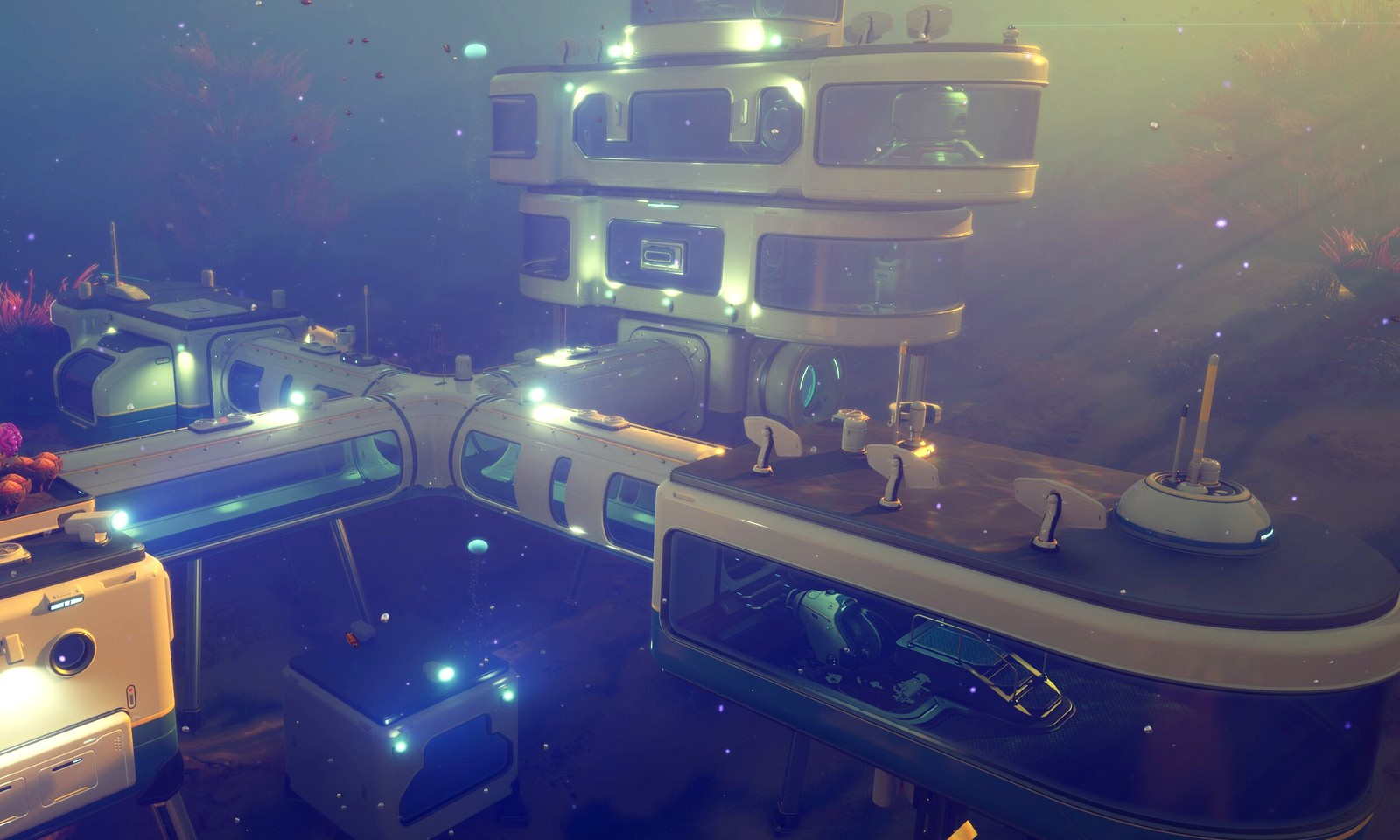
Look at the home loop, not the room count.
The entrance should lead into a useful loop.
If you enter and immediately lose the next craft path, the base needs flow work before another room.
Support should calm the base, not complicate it.
If power or support systems make the base feel more fragile, fix the support order before expanding.
Scanner timing should come after the home loop works.
If drop-off, crafting, and power still are messy, scanner support usually is early even if it sounds useful.
What to move now and what to delay
Fix now
Delay until the base works
Reason
Storage near the main return path
Extra side storage for future categories
Most early friction is caused by mixed drop-off, not by too little total space.
Reliable power for the current footprint
Support for rooms that do not remove today's blocker
A stable small base beats a wider fragile one.
One clear craft zone
A broad "someday" expansion branch
The base should turn materials into action quickly before it grows sideways.
One route-support addition with obvious value
Systems that sound efficient but do not yet shorten the next run
Good first-base upgrades should reduce real repeat friction immediately.
Signs the base is fixed enough to move on
Once those four things are true, the base is useful enough to
support wider progress instead of competing with it.
Three-return base cleanup test
A base cleanup is finished only if normal returns become
easier. Test the layout with three small return moments before
expanding again; each one should remove a different kind of
friction.
Return test
What should happen
Fix if it fails
Material return
The useful batch goes straight to next-craft storage or raw basics.
Move the drop zone closer to the entry and reduce container categories.
Survival return
Food, water, and route prep stay separate from building materials.
Create one visible survival shelf before adding more base rooms.
Upgrade return
The base can turn the reward into a craft, scan, or route decision quickly.
Fix power, craft-point distance, or missing staging before widening the footprint.
If your next return is already planned
Use the next craft as the cleanup test instead of trying to
reorganize the whole base. For example, if you are returning
with a mixed load and need one tool before sunset, stage the
materials for that tool closest to the fabricator, put anything
unrelated into one overflow container, and leave the rest of
the room alone for now.
Next-return situation
Do before leaving
Pass condition
You need one named tool or upgrade.
Stage only its materials beside the craft point.
You can identify the missing item without opening every container.
You are going back for a repeat material loop.
Leave one empty drop zone for that loop's reward.
The return has a destination before the inventory is full.
You are unsure whether to expand.
Run one more normal return through the current footprint.
Expansion is justified by a repeated delay, not by visual clutter.
This is a deliberately narrow repair. If the next three returns
become faster, keep the layout. If they do not, fix the single
repeated bottleneck rather than restarting the entire base.
One-session maintenance note
Reviewed August 17, 2026: this page was checked against the
current beginner base flow goal, which is not a perfect final
layout. The advice is meant for the player who already placed a
basic room, returned from two or three material loops, and now
feels slower at home than outside.
If that describes your save, do not restart the base. Use one
short cleanup session to prove the entrance, storage, crafting,
and power path can support the next route. If the same material
batch still takes several container checks to use, the base is
not fixed yet even if the room count looks impressive.
Open the next base support page only after the home loop works