A good resource loop is not the longest route or the fullest
inventory. It is the trip you can repeat calmly, bank cleanly, and
connect to the next craft without wasting another search.
Published July 29, 2026Resources lanePatch sensitivity: Medium
Last reviewed August 24, 2026Review focus route safety, storage flow, and material payoff
Reviewed on August 24, 2026 against the current Early Access guide
lane. The advice was tightened around repeatable first-hour loops,
cleaner banking, and the kinds of route choices that still hold up
after the July update cycle.
Quick answer
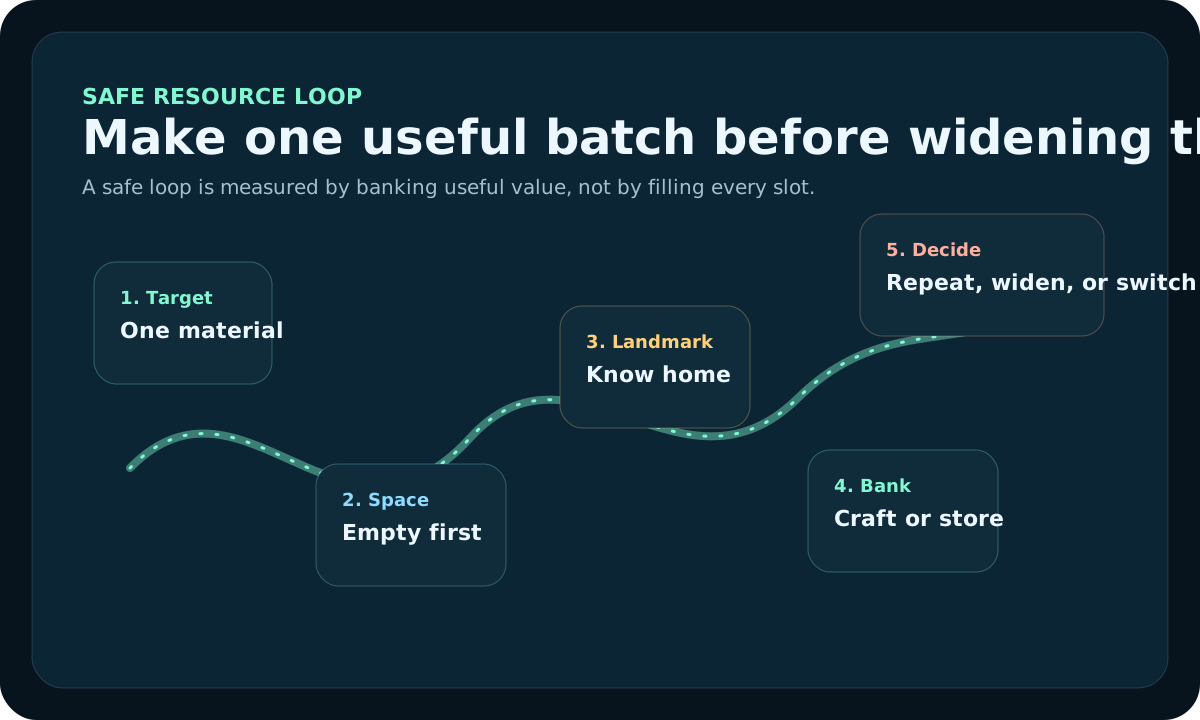
Build a safe resource loop by choosing one target material,
clearing inventory first, using a recognizable return
landmark, banking the first useful batch, and repeating only
after the route still feels safe under normal oxygen pressure.
Safe resource loop route
A safe loop is not the richest swim you can survive. It is the
shortest route that banks the named material without making the
next return harder to understand.
Change one variable at a time: material target, distance, depth, or storage plan. If the loop gets harder, step back before widening.
What makes a resource loop safe
Safety is not only about avoiding creatures. A resource loop is
unsafe when it depends on perfect oxygen timing, unclear
landmarks, a full backpack, or a reward that does not actually
solve the next craft. The route can look harmless and still
waste time if every return home creates sorting, guessing, or
another material question.
The best early loop has a simple rhythm: leave with a target,
collect the target first, ignore unrelated materials unless
they are directly useful, return before pressure stacks, then
craft or store the batch immediately.
A useful test is to picture the first mistake before you leave.
If the likely failure is "I will chase one extra outcrop and
come back lost," the loop is already too wide. If the likely
failure is "I will be home in forty seconds with the exact batch
I need," the loop is probably sized correctly for early play.
Resource loop planner
Loop part
Good sign
Bad sign
Fix
Target
You know the craft or upgrade the material supports.
You are gathering because the item might be useful later.
Open material priority before leaving.
Inventory
There is room for the batch before the swim begins.
Old materials are already stealing space.
Deposit first, then start the loop.
Route
The return landmark is visible or easy to describe.
The route home depends on guessing direction.
Use a shorter edge loop first.
Banking
The first useful batch ends the run successfully.
You keep extending because more material is nearby.
Return once the named craft can move forward.
Route examples
Choose the loop style that matches the blocker.
Focused material loop
Use when one material is stopping a tool, base part, or upgrade that will immediately improve the next session.
Wider resource loop
Use only after the shorter loop is calm enough that widening does not create oxygen or landmark panic.
Rare material loop
Use when the reward is tied to a current unlock and the return plan is stronger than curiosity.
How to repeat the loop without making it worse
Run the shortest version once and bank it before testing a wider version.
Change only one variable at a time: target, distance, depth, or storage plan.
Call the turn-back when the route starts costing attention instead of giving information.
Stop the route when the named batch is useful, not when the inventory is full.
After returning, decide whether the next trip should repeat, widen, or switch materials.
This keeps the loop readable. If you widen, deepen, and change
targets in the same trip, you will not know which part caused
the failure.
How to choose the first target material
The first target should be the material that changes the next
run, not the material that sounds rarest. Titanium is useful
when storage, base pieces, or basic building flow are the
blocker. Copper is useful when tools, scanning, or early systems
are holding back progress. Quartz or Glass matters when the next
craft is tied to base or utility support. Rare materials should
wait until the route has a named payoff.
If your current problem is
Start with
Reason
The base or storage plan is messy.
Titanium and basic build support.
It turns clutter into a more useful home loop.
The next tool or scanner step is blocked.
Copper-focused routes.
It supports practical upgrades that make later routes cleaner.
The route is known but the utility craft is missing.
Quartz or Glass support.
It helps when base and system progress are the next real gain.
The save needs one higher-value unlock.
A rare material route only after prep.
It is worth the risk only if the payoff is immediate.
Banking is part of the route, not the end screen
A loop is not finished when you reach home. It is finished when
the material is stored in the right place, turned into the craft
you planned, or converted into the next clear route. If you
return with value and then leave it in a mixed pile, the next
trip starts with confusion again.
After every resource run, ask one question before leaving: did
this batch solve the named blocker? If yes, switch pages or
upgrade the route. If no, repeat a smaller version instead of
widening the search.
When you return home and see
Do this next
Why it works
The named craft is one batch away.
Craft immediately, then redesign the next loop around the new unlock.
The route pays off before inventory clutter steals the result.
You brought mixed materials and no clear blocker is solved.
Sort only the useful batch and shrink the next route to one material.
You remove confusion without pretending the whole trip was efficient.
The route felt calm but the storage wall did not.
Pause the next swim and fix storage labels or container purpose first.
A readable base makes the same route worth repeating.
When to stop using the same loop
A loop should change when the reason for repeating it changes.
If the same route no longer supports the next craft, the same
materials are showing up too slowly, or the route now asks for a
deeper or riskier return than before, it is time to stop and
redesign the loop. Repeating a loop that no longer pays off is
one of the easiest ways to make the game feel grindy.
The better move is usually to shrink the loop again, choose a
different target, or pair the route with a new support page such
as storage upgrades, material priority, or the first base build
order. That keeps the route useful without turning it into a
habit that no longer serves a player need.
A loop is healthy when the next repeat has a reason. If the only
reason is habit, switch to a route, storage, or craft decision
page before leaving again.
That one extra check prevents the route from becoming a grind
loop that looks efficient but no longer creates a meaningful
gain.
Two-run loop validation before widening the route
A safe loop should prove itself twice before it expands. The
first run shows whether the path is readable. The second run
shows whether the reward is repeatable and worth the storage
and time it consumes.
Validation step
Pass condition
Change the loop if
Run one: learn the path.
You can describe the return landmark before pressure starts.
The route only works because you got lucky with visibility or direction.
Bank one: sort the reward.
The returned batch lands in one useful place and supports one craft.
The material becomes mixed clutter or solves no named blocker.
Run two: repeat the target.
You return faster, calmer, or with a cleaner material batch.
The second run is just as confusing as the first.
Decision: repeat, widen, or retire.
The next action is obvious from the route result.
You are repeating only because the route feels familiar.
Example: turning a messy material swim into a useful loop
A common early mistake is leaving base with half an inventory,
seeing three useful materials, and returning with a mixed pile
that does not finish anything. A better version starts smaller:
clear eight to ten slots, name one blocked craft, and swim only
the route that supports that craft. If Copper is blocking a tool,
Copper comes first. If Titanium is blocking storage or a basic
base piece, Titanium comes first. If the target changes mid-run,
bank the first batch before chasing the new one.
After returning, do not judge the loop by how full the inventory
looks. Judge it by what changed. Did the batch finish the tool?
Did it create a cleaner storage wall? Did it open a safer next
route? If the answer is no, the route was too wide or the target
was too vague. Shrink the next loop and repeat the useful part.
Three-loop starter plan for a new save
If the route logic still feels abstract, use a simple three-loop
test. It gives the first hour structure without pretending every
swim should be perfect.
Loop
Target
Stop as soon as
What you learn
Loop one
One basic material that unlocks the next craft.
You can complete or nearly complete the named craft.
Whether the route is readable at normal oxygen pressure.
Loop two
The same material or its missing partner.
The inventory starts filling with unrelated pickups.
Whether the route stays efficient on a repeat run.
Loop three
A slightly wider branch or a support material.
The return landmark starts costing attention.
Whether the loop is ready to widen or should stay small.
Maintenance note for this route advice
Review date: August 24, 2026. This page was refreshed to stay
useful during the current Early Access update cadence, with the
emphasis on route logic rather than fixed spawn promises. If a
later patch changes resource density or travel pressure, trust
the one-target, bank-early framework first and retest the exact
loop second.