What should you upgrade before going deeper in Subnautica 2?
Going deeper is not one upgrade. It is a chain of support decisions:
oxygen margin, storage discipline, base stability, scanner value,
and whether vehicle progress is solving distance or just distracting
from a weak route.
Published July 29, 2026Vehicles & Bases lanePatch sensitivity: High
Last reviewed August 24, 2026Patch sensitivity High
This guide is rechecked when depth, vehicle, scanner, or base-support changes affect whether a deeper route is ready.
Quick answer
Upgrade before going deeper only when the upgrade protects a
specific deeper route. Prioritize oxygen if returns are tight,
storage if good trips come home cluttered, base power if
support systems stall, scanner help if the target is unclear,
and vehicle progress when distance is the true blocker.
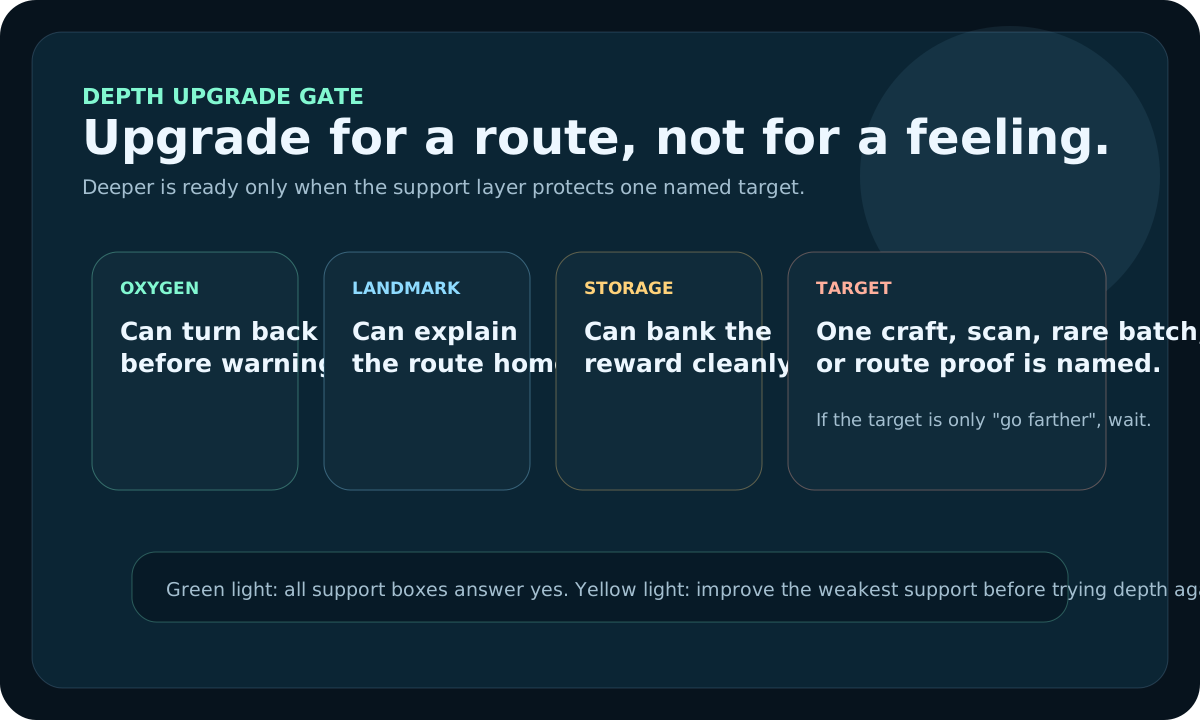
Depth upgrade gate
Use this gate before spending materials. An upgrade is worth it
only when it protects one named deeper route, not when it simply
makes "go farther" sound safer.
If the target is still vague, improve route clarity before upgrading for distance.
Depth readiness is a support question
A deeper route fails when support layers are missing. The player
may think the blocker is courage or curiosity, but the real
issue is often thinner: no oxygen margin, no clear return
landmark, no storage space for the reward, no base system ready
to use the material, or no reason to be there beyond "it looks
like progress."
Before spending materials, ask what the deeper route is supposed
to solve. If the answer is one craft, one scan, one rare batch,
or one route confirmation, an upgrade can be judged properly. If
the answer is "go farther," the plan is still too vague.
Upgrade choice table
Symptom
Upgrade priority
What it should fix
Do not upgrade if
Returns are possible but rushed
Oxygen and route margin
More time to leave safely, not permission to wander.
You still cannot name the route target.
Good trips bring back messy value
Storage and drop-off flow
Faster banking and clearer next craft decisions.
The inventory is full because you collect without a target.
Base utilities keep stalling
Base power and support systems
A reliable home loop before riskier routes.
You are adding rooms only to make the base look bigger.
You do not know where the next material is
Scanner Room value
Less roaming and better repeat routes.
The missing problem is survival, not search time.
Distance is wasting the session
Vehicle progress
Safer travel to a route you already understand.
A vehicle would only carry you into unclear danger faster.
Route pressure
Match the upgrade to the kind of depth pressure you are seeing.
Depth pressure
If darkness and distance stack together, upgrade return margin before chasing another reward.
Base pressure
If the base cannot process what you bring home, deeper routes will create more clutter than progress.
Travel pressure
Vehicle progress matters when distance is the blocker and the destination already has a reason.
The final go-deeper check
How to know the upgrade worked
An upgrade worked if it changes the next deeper attempt in a
measurable way. More oxygen should make the return calmer, not
just encourage a longer panic swim. More storage should bring
home a useful batch without creating sorting chaos. A stronger
base should process the reward faster. Scanner support should
reduce roaming, not replace route discipline. Vehicle progress
should make a known route safer or shorter, not turn curiosity
into a bigger loss.
Upgrade
Successful test
Still not ready if
Oxygen
The same route returns with calm margin.
You use the margin only to push into unknown water.
Storage
The reward fits and gets banked into a clear craft path.
The larger carry just encourages random collecting.
Base support
The base turns the deeper reward into action quickly.
Power, sorting, or build order still interrupts every return.
Vehicle progress
Travel to a known target becomes safer and easier to repeat.
The vehicle only carries you farther from a weak plan.
Upgrade one layer, then retest the same route
Do not upgrade oxygen, storage, base systems, and vehicle
progress all at once before retesting. If the next deep attempt
fails, you will not know which support layer was still weak.
Upgrade the most obvious blocker, repeat a familiar version of
the route, and only then widen the route or spend the next
material batch.
This turns deeper progression into evidence instead of hope.
The player learns whether the route is now safer, the base is
now useful enough, or the next real blocker has moved to a
different system.
Depth attempt debrief: what ended the last run?
The best depth upgrade is usually hidden inside the last failed
attempt. Before spending, name the exact moment the run stopped
being useful. That keeps the next upgrade attached to evidence
instead of hope.
Last run ended because
Upgrade or fix first
Retest rule
You turned back with the target still unknown.
Route memory, scanner support, or a smaller scouting pass.
Repeat the known edge before going deeper again.
You found the target but the return felt rushed.
Oxygen margin, safer landmarks, or vehicle support.
Return from the same target with calm time left.
You reached home but could not use the reward.
Storage flow, base power, or a clearer next-craft plan.
Bank the reward and start the next craft without searching lockers.
A threat forced the dive to collapse.
Scout the warning cue, choose a stop signal, and delay deeper commitment.
Leave before the same pressure stacks twice.
How to avoid buying the wrong upgrade first
Wrong-first upgrades usually happen when the player chooses the
most visible problem instead of the most expensive one. Oxygen
looks urgent, but if the route is only long because the return
path is unknown, a landmark or route upgrade may matter more.
Storage looks boring, but if every good run comes home messy,
storage can unlock more progress than a bigger travel system.
Base power looks abstract until you notice the whole home loop
keeps stalling at the exact moment the next craft should happen.
The best test is to ask what the current upgrade will remove
from the next three sessions. If it does not make those sessions
easier to understand, easier to repeat, or easier to bank, it is
probably not the first upgrade yet.
Good upgrade timing should feel boring in the best way: the same
route becomes cleaner, the same return becomes safer, and the
next decision becomes easier to name.
Three sample upgrade paths for common stuck points
If the upgrade choice still feels unclear, match the stuck point
to a short path instead of buying the most expensive option.
The right upgrade should remove one repeated failure from the
next route, not just make the save look more advanced.
Current stuck point
Upgrade path
Retest before moving deeper
You reach the edge but rush home every time.
Oxygen margin, clearer return landmark, then storage.
Repeat the same edge route and return with calm time left.
You bring back value but cannot use it cleanly.
Storage flow, base power, then build-order support.
Bank the reward and turn it into one visible craft or next route.
You know the destination but travel wastes the session.
Vehicle support, route marker memory, then deeper target prep.
Reach the known target faster without widening into unknown danger.
What a cautious player should buy first in three common cases
Many players are not choosing between every system. They are
deciding what to buy with one rare-material batch after a run
that felt almost good enough. Use the case that sounds closest
to your save.
Case
Buy first
Delay until later
You reach the cave lip, see the target, and leave because the return looks thin.
Oxygen margin or route support that makes the return boring.
Vehicle extras that only let you stare at the same risky line for longer.
You bring home good materials, then spend five minutes sorting lockers.
Storage flow or base support that turns the reward into a craft immediately.
More depth reach before the current reward can be used cleanly.
You know where to go, but half the session disappears during travel.
Vehicle or travel support for the already-proven route.
Scanner or base expansions that do not shorten the actual trip.
60-second pre-dive brief before spending rare materials
Before committing to a deeper upgrade path, pause for one short
brief. This catches the most common mistake: upgrading the
system that feels exciting instead of the system that actually
failed on the last route.
If one box fails, the safer choice is usually a small support
fix instead of a deeper push. That kind of boring correction is
what keeps Early Access progression from turning brittle.
Use the last failed dive to choose the upgrade
Imagine a familiar edge route where you reached the target,
found the material, and still turned back because the return
felt rushed. That is an oxygen or route-margin problem. If you
returned safely but left the reward in a mixed inventory, that
is a storage or base-flow problem instead. Choose from the
failure that actually ended the run, not from the upgrade that
looks most advanced.
If two boxes still fail, do not stack another upgrade on top.
Stabilize the weakest support layer and repeat the same route
once before widening the expedition.
Maintenance note for depth-readiness advice
Review date: August 24, 2026. This page stays intentionally
focused on route evidence instead of fixed item promises. If a
future Early Access patch changes vehicle pacing, scanner value,
or survival pressure, retest the same known dive and update the
weakest support layer first.
Open the deeper-route support page you actually need